Place of birth
Maternal outcomes and birth interventions among women who begin labour intending to give birth at home compared to women of low obstetrical risk who intend to give birth in hospital: A systematic review and meta-analyses
The Birthplace in England Research Programme was a multi-disciplinary research progamme, jointly funded by the National Institute for Health Research (NIHR) Service Delivery and Organisation programme and the Department of Health Policy Research Programme. Further analyses of data from the Birthplace cohort study were funded by the NIHR Health Services and Delivery Research Programme.
Insights from a publicly funded homebirth program:
This paper has two aims. The first is to describe the implementation of a publicly funded homebirth service with an employed mentor. The second is to provide the outcomes from a matched cohort of women who received care from the same Midwifery Group Practice [MGP] who gave birth at home, compared with those who gave birth in hospital
You can give birth at home, in a unit run by midwives (a midwifery unit or birth centre) or in hospital.
Your choices about where to have your baby depend on your needs, risks and, to some extent, on where you live.
You can usually consider any of these birth locations. But if your pregnancy is high risk or you have certain medical conditions, it’s safest to give birth in hospital, where specialists are available. This is in case you need treatment during labour.
If your pregnancy is low risk and you give birth at home or in a unit run by midwives, you’re less likely to need assistance such as forceps or ventouse (sometimes called instrumental delivery).
Wherever you choose, the place should feel right for you. You can change your mind at any point in your pregnancy.
Where to find local place of birth information and statistics
National maternity Dashboard
A great resource for looking at birth data from the NHS by Hospital trust.
Birth data from the Office of National Statistics
Live births by age, sex, marital status, country of birth, socio-economic status, previous children and UK area of parent. Also includes trends in baby names.
Hospital information
Maternity and neonatal voices partnership
Hospital information
Maternity and neonatal voices partnership
Hospital information
Maternity and neonatal voices partnership
Hospital information
Maternity and neonatal voices partnership
Hospital information
Maternity and neonatal voices partnership
Hospital information
Maternity and neonatal voices partnership
Hospital information
Maternity and neonatal voices partnership
Making plans for birth
Some questions to consider about the data your place of birth provides or shares:
How many women went into labour spontaneously and what were their birth outcomes?
- how many had labour speeded up?
- how many experienced an instrumental delivery?
- how many experienced an episiotomy?
- how many experienced a tear?
- how many experienced an unplanned caesarean birth?
How many women opted for induction of labour and what were their birth outcomes?
- how many experienced an instrumental delivery?
- how many experienced an episiotomy
- how many experienced a tear?
- how many experienced an unplanned caesarean birth?
- you may also want to consider
- how does induction work here, where will I be?
- can my partner stay with me?
Caesarean birth questions:
- How many planned, unplanned and emergency caesarean births in the trust?
- Where will I wait for a planned caesarean birth?
- How do you support skin to skin?
- Where will I go afterwards?
- What sort of closure and dressing do you use and how will it affect my recovery?
- How many women experienced post op complications?
- How many women experienced post op infections?
- What does postnatal care look like?
Resources to support your decision making:
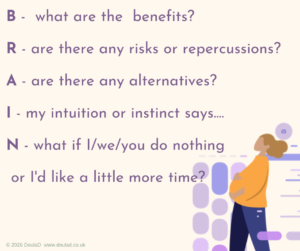
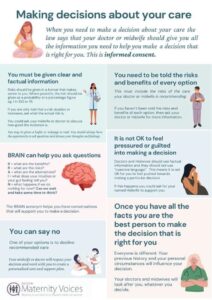
Writing your birth plan is not about the plan, it’s about the process of making yourself aware of all your options.
Here are some templates and resources you might find useful:
Visual birth planner
Create, edit and share your very own free visual birth plan. Select the elements you would like to add to your plan and download it. You can even create your own elements as part of the process.
NHS birth plan
An easy to follow checklist and birth plan template from Best Start in Life (NHS).
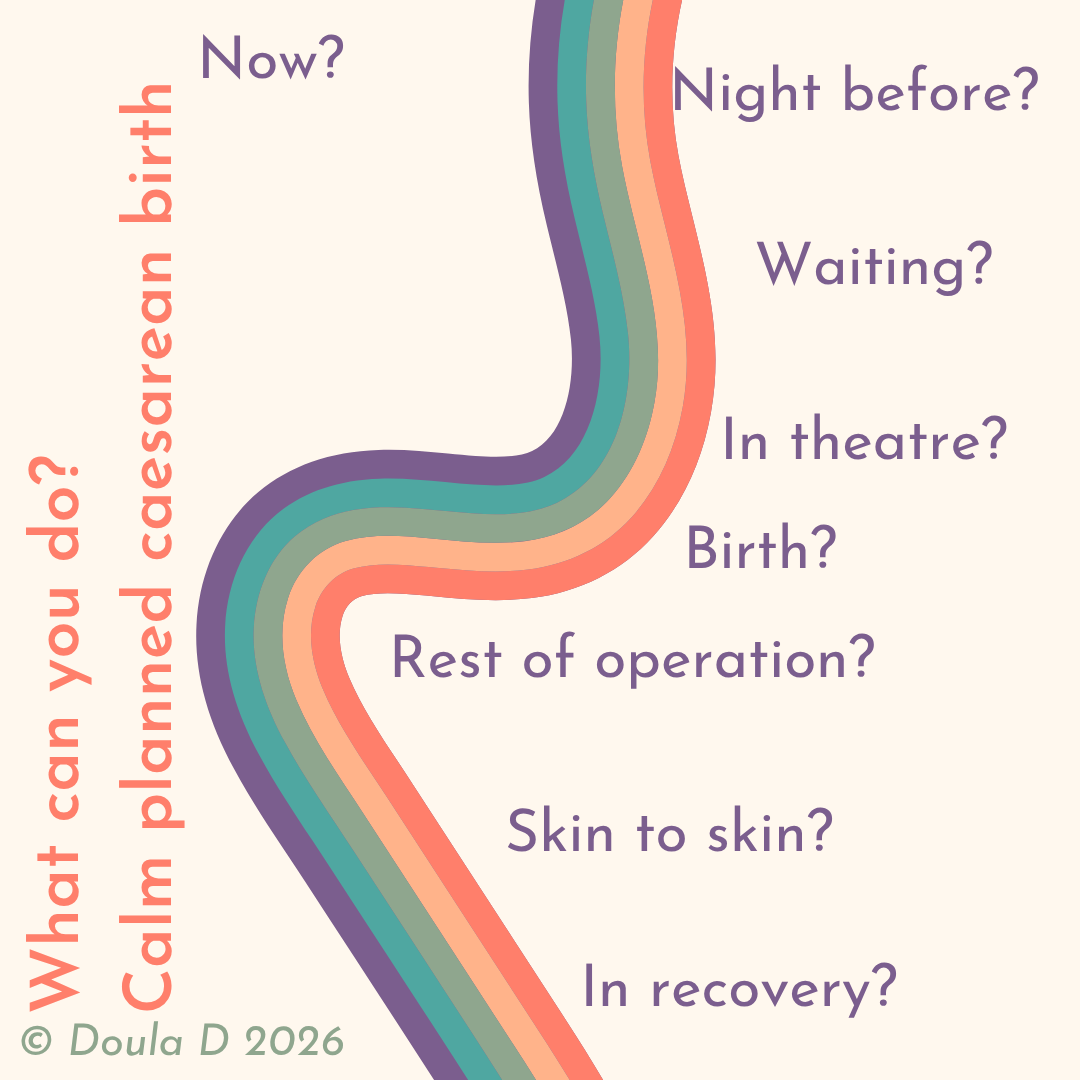
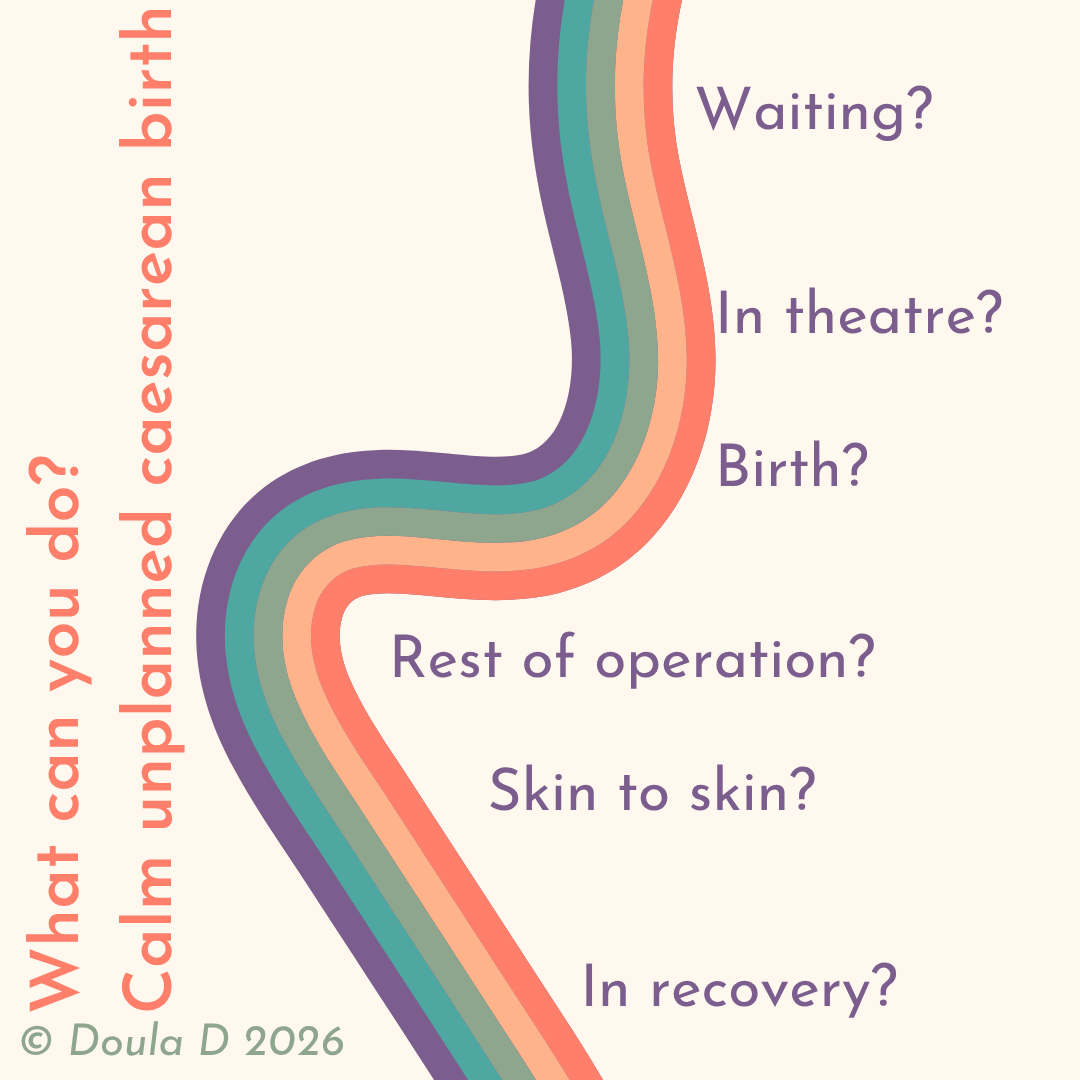
Caesarean birth plan
Creating a caesarean birth plan, even if you aren’t preparing to have a caesarean, can help you to cope with any unexpected changes during your pregnancy or during labour.
Making a birth plan
A birth plan is a written record of what you would like to happen during your labour and after the birth. It can also include things you’d like to avoid.
Think about what is in your control – what can you plan for and what will you need support with?
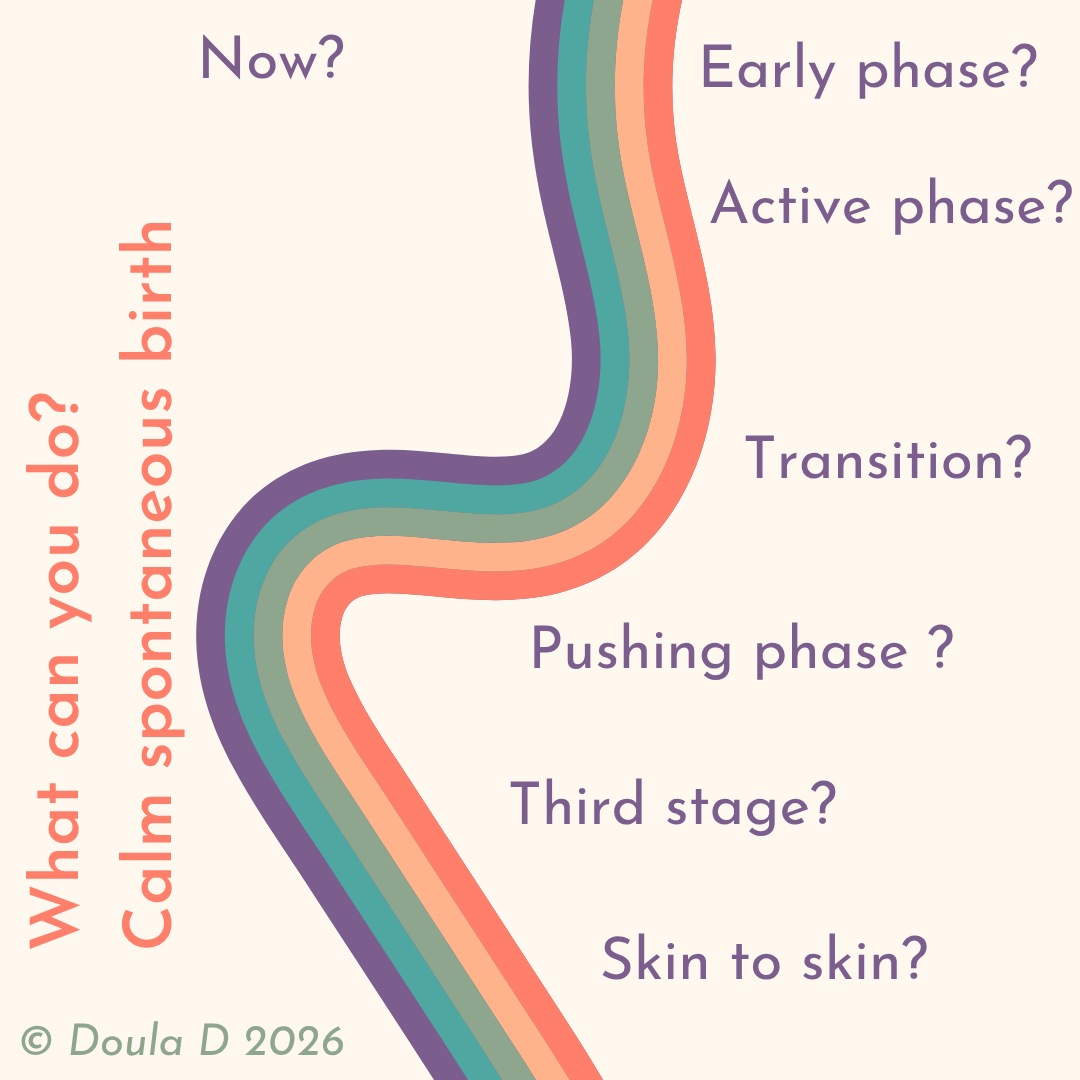
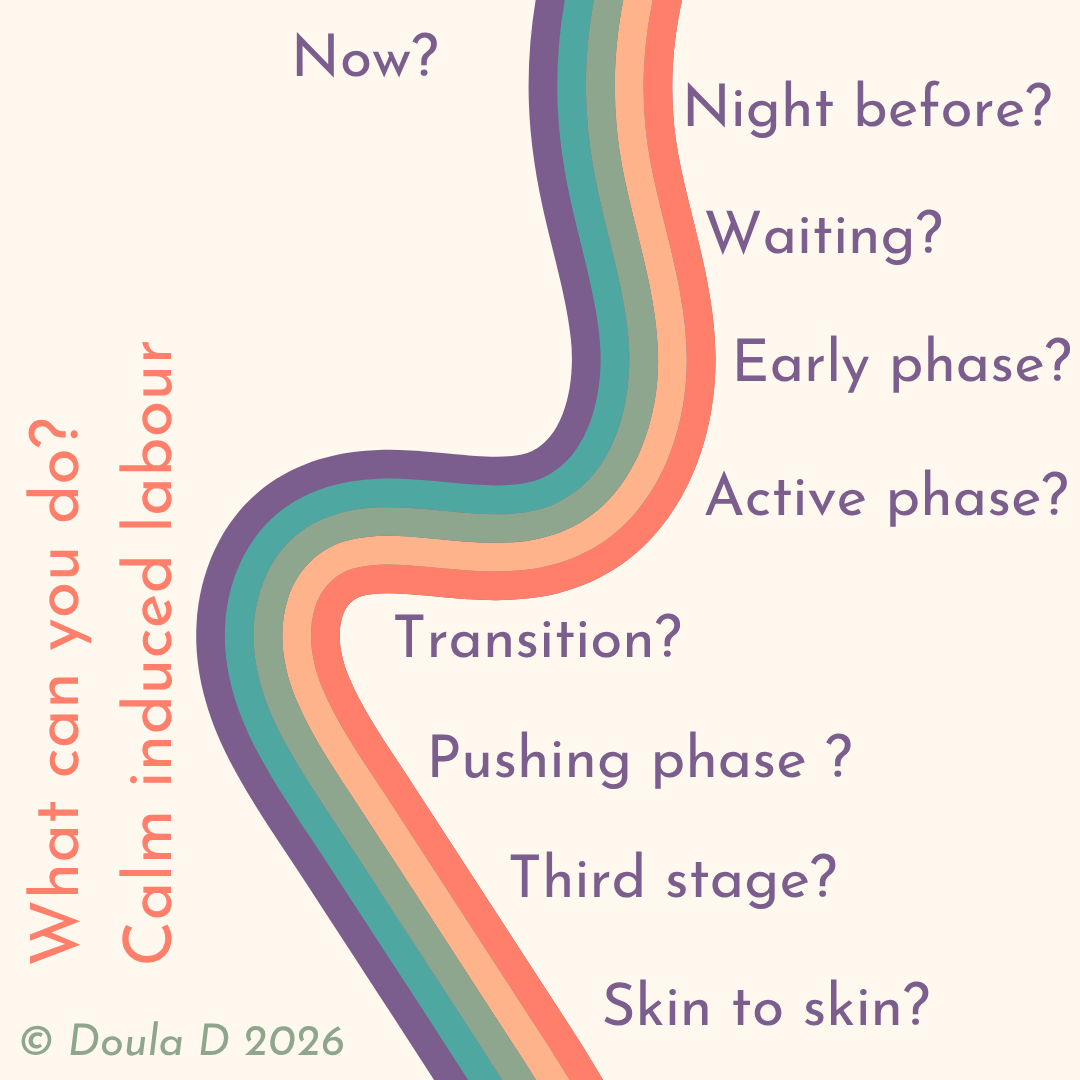
Comfort measures and pain relief
When do you use it?
Gas and air is usually used during contractions to help take the edge off the pain. You breathe it in as a contraction builds, then stop using it as the contraction fades. It works quickly and gives you control over how
much you use. Available in home, MLU, labour ward and surgical settings.
Benefits
- Encourages calm, rhythmic breathing and relaxation
- Helps reduce pain and tension during contractions.
- Works quickly and can be used at any stage of labour.
- Has no known long-term effects on parent or baby.
- Gives you control over how much relief you want.
Risks
- Can make you feel lightheaded or nauseous.
- May dry out your mouth.
- Does not work the same for everyone.
- It may not be available when you give birth
When do you use them?
Opioids such as pethidine or diamorphine are usually given as an injection to help ease pain in labour. They can also help you relax, but they are not usually recommended if you are close to the pushing stage because
they can make you and your baby sleepy. They usually start working after about 20 minutes and last for a few hours. Require a Midwife to administer them. Available on labour ward and in some venues in the MLU.
Benefiits
- Can reduce pain and help you cope with contractions.
- May help you feel more relaxed.
- Can be used alongside other pain relief options.
- Starts working fairly quickly.
Risks
- Can cause drowsiness, nausea, or lightheadedness.
- May affect the baby’s breathing or alertness after birth.
- Can make breastfeeding more difficult at first.
- May not be suitable for everyone
When do you use it?
An epidural is usually given during established labour and is one of the most effective forms of pain relief. It is placed in your lower back by an anaesthetist and can be topped up throughout labour. It can take around 20 to 30 minutes to work, so it’s best to ask for it before the pain becomes too intense. Only available in labour wards and requires an anaesthetist to place it.
Benefits
- Gives very effective pain relief.
- Can be topped up to last through labour.
- May help you rest if labour is long or particularly painful.
- You stay awake and alert during labour.
Risks
- Can lower your blood pressure or make your legs feel heavy.
- May slow the second stage of labour.
- You may need continuous monitoring and a drip.
- There is a small chance of needing an assisted birth, such as forceps or ventouse.
When to use it
A TENS machine is usually most useful in early labour, especially if you have back pain. It can be used at home and, in some cases, right through to birth. It gives a tingling sensation that you control yourself, and it may help you stay mobile during labour.
Benefits
- Can help with pain, especially in early labour.
- You control the settings yourself.
- You can keep moving while using it.
- It is non-invasive and drug-free.
Risks
- It may not work well for everyone.
- It is not usually provided in hospital for active labour.
- It should not be used in water.
- It may need to be removed if it stops being effective.
A birth pool can be used in labour to help you relax and manage pain, and you may also choose to give birth in the water if it is safe to do so. Warm water can make it easier to move, change position, and feel more comfortable during contractions.
Benefits
- Helps with relaxation and pain relief.
- Makes movement and position changes easier.
- May help you feel more in control during labour.
- Is considered a safe option for many low-risk pregnancies.
Risks
- It is not suitable for everyone, especially if complications develop.
- You may need to leave the pool if extra monitoring or pain relief is needed.
- Access to a pool may be limited.
Complementary therapies and comfort measures can help you feel in control of your labour and use less medication to reduce pain.
Some ideas for massage








Up and down breathing
How breathe can help in birth
For any birth
“Up-Breathing” or Slow Breathing: Focus on slow, deep breaths, ensuring the exhalation is longer than the inhalation (e.g., inhale for 4, out for 7) to keep your body relaxed.
“Sigh Out Slowly” (SOS): Breathe in through your nose and sigh out gently through your mouth, mimicking the flickering of a candle flame, which helps release tension.
Visualisation: Pair breathing with calming imagery, such as inhaling a soft colour and exhaling tension as a dark colour.
Rectangle breathing: pick a rectangle in your environment – door, window, document, mobile phone and use this to guide your breath. Breathe in as you trace the short sides and out as you trace the long sides. Aim to make
the out breath twice as long as the in breath.
Here are some free to download hypnobirthing and relaxation tracks, including a caesarean birth, induction of labour and birth partner relaxation:
Here are some free to download hypnobirthing and relaxation tracks, including a caesarean birth, induction of labour and birth partner relaxation:
Birth and meeting your baby
Eating dates in late pregnancy may improve cervical ripening, shorten labour, and reduce the need for induction, though more research is still needed.
Studies suggest pineapple consumption may be associated with slightly better cervical ripening and shorter labour.
Staying mobile can help reduce aches, improve mood, and prepare your body for labour.
Sex in late pregnancy may be safe, but the evidence does not show it reliably brings on labour. if you feel safe enough, loved enough and are in the right environment for sex the likelihood is your oxytocin is flowing well and you’re in the right place and mind set for birth.
“The energy that gets the baby in is the energy that gets the baby out.”
Ina May Gaskin
A midwife or doctor will, while doing a vaginal examination, sweeps a finger around and/or within the opening of your cervix in an attempt to separate the amniotic membranes from the cervical surface.
Synthetic prostaglandin are used to encourage changes that might help to start labour. They work like the body’s natural hormones by softening and opening the cervix which can help start contractions.
It can be given as:
- a pessary placed in the vagina, which releases medicine for up to 24 hours.
- vaginal gel, with a possible second dose after 6 hours.
- a vaginal tablet, with a possible second dose after 6 to 8 hours.
- tablets to swallow, taken every 2 hours or every 4 hours depending on the dose, up to 8 tablets maximum.
Synthetic prostaglandin hormones can cause nausea, vomiting, and diarrhoea. A serious side effect is hyperstimulation of the womb, where contractions become too frequent or intense, potentially affecting the baby’s heart rate. If hyperstimulation occurs, your midwife or doctor will stop the medicine, remove it if possible, and may give another drug to slow contractions.
A midwife or doctor will, while doing a vaginal examination, sweeps a finger around and/or within the opening of your cervix in an attempt to separate the amniotic membranes from the cervical surface.
The Physiology of Childbirth: An animated film that demonstrates the complex yet critical interaction of hormones and mechanics during labour, birth and the postnatal period, and the potential impact this has on the outcome and experience.
The film aims to increase knowledge of childbirth physiology, and to demonstrate the importance of understanding the impact of physiology on childbirth.